
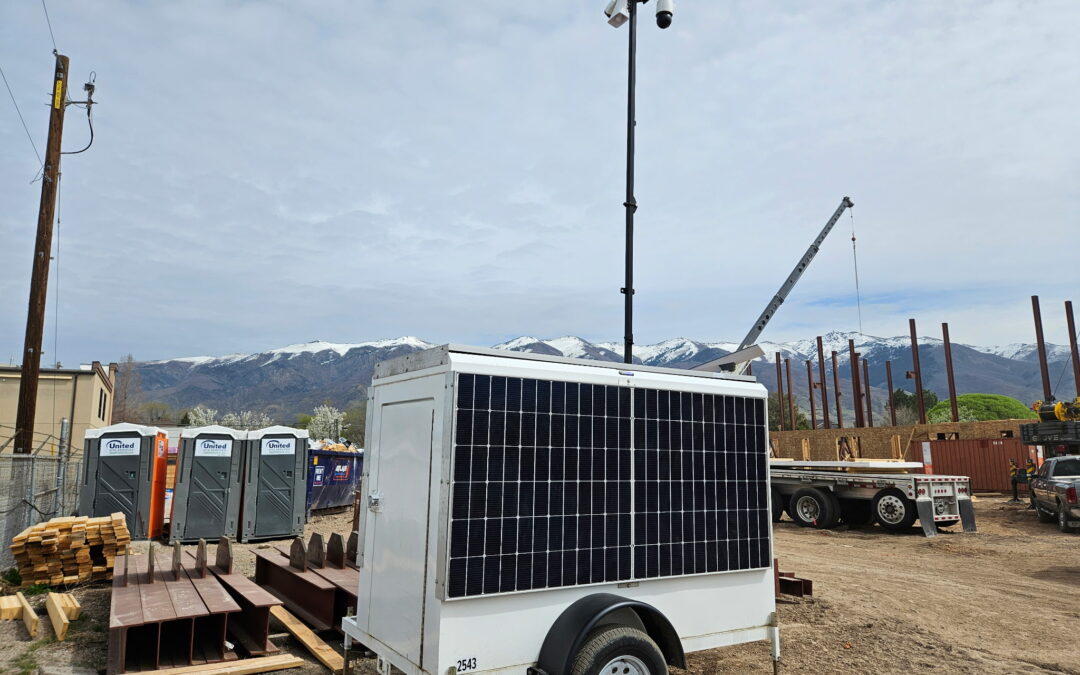
A stolen skid steer, copper pulled overnight, or an unauthorized visitor after hours can set a project back fast. Finding the best mobile security trailer for construction sites is not really about buying the biggest unit or the one with the most cameras. It is about choosing a field-ready system that matches your site conditions, risk level, power access, and response needs.
Construction leaders do not need more tech for tech’s sake. They need visibility, reliable alerts, and equipment that keeps working when the site is remote, muddy, dark, or constantly changing. That is where a mobile security trailer earns its value – not as a passive camera tower, but as an active layer of site protection and operational control.
What makes the best mobile security trailer for construction sites?
The best fit usually comes down to five factors: camera coverage, power reliability, detection accuracy, deployment speed, and support. If one of those is weak, the trailer may still look impressive on paper but perform poorly in the field.
Camera coverage matters first because construction sites are rarely neat rectangles. You may need to watch perimeter fencing, material laydown yards, entry gates, parking areas, fuel tanks, and partially completed structures at the same time. A trailer with elevated camera positioning and flexible viewing angles gives better oversight than a basic fixed setup. The goal is not just recording incidents after the fact. The goal is complete visibility and control while work is happening and after crews leave.
Power reliability is just as critical. Many jobsites do not have dependable utility power at the point where surveillance is needed most. Others may have temporary power, but not enough confidence that it will stay on overnight or through weather events. In those cases, a trailer with integrated battery backup, solar support, generator compatibility, or hybrid power capability gives you protection without tying security performance to an unstable power source.
Detection accuracy can make or break adoption. If a system floods your team with false alarms from moving shadows, wildlife, or blowing debris, people stop trusting the alerts. AI-enabled detection helps separate routine motion from actual threats such as a person entering a restricted area or a vehicle approaching after hours. That means faster response and fewer wasted calls.
Deployment speed matters because construction phases change. A trailer may need to move from initial sitework to a materials yard, then closer to vertical construction, then toward punch-list areas near project completion. A unit that is difficult to relocate or reconfigure creates friction for the site team. Portable means more than towable. It should be practical to reposition as site priorities change.
Support is often overlooked during the selection process. A trailer is only as useful as the people standing behind it. If a camera loses connection, a battery underperforms, or the site layout changes, you need responsive service and real operational guidance, not a help desk script.
Why one trailer is not automatically the best choice for every jobsite
There is no single answer to the best mobile security trailer for construction sites because risk profiles vary widely. A downtown multifamily project has different exposure than a highway expansion, solar field, industrial build, or remote utility job. The right trailer depends on what you are protecting and what conditions the unit has to survive.
On a dense urban project, after-hours trespassing and vandalism may be the biggest issues. In that case, strong perimeter visibility, motion-triggered alerts, and high-resolution footage around access points may matter more than long-duration off-grid power. On a remote civil job, the opposite may be true. You may need a unit that can stay operational for long stretches with limited service access and limited grid support.
Value also shifts based on what theft costs your operation. If losing one machine attachment delays a subcontractor for a day, your threshold is different than a site storing generators, fuel, wire, tools, and high-value rental equipment. The more downtime a theft event can cause, the more important real-time intervention becomes.
The features that actually protect a construction site
A mobile trailer should do more than capture video. It should help prevent disasters before they get worse.
High-mounted surveillance cameras are the foundation, but they need to be paired with intelligent analytics. Good systems can identify motion patterns, detect intrusion zones, and send real-time alerts when activity occurs in restricted windows or sensitive areas. This is where AI-enabled monitoring becomes useful in practical terms. It helps your team focus on events that deserve attention instead of sorting through noise.
Two-way audio can also be a strong deterrent, especially on sites dealing with recurring trespass or after-hours wandering. A live voice challenge often stops an incident before property is damaged or material is taken. For many project managers, that immediate intervention is more valuable than simply having footage for an insurance claim later.
Lighting should be part of the conversation as well. Dark jobsites create blind spots, increase safety concerns, and make response slower. In some cases, combining surveillance with portable lighting gives stronger perimeter awareness and better video quality overnight. It also supports crews working early starts, late pours, or emergency repairs.
Power architecture deserves close scrutiny. Solar-only can work in the right environment, but shaded sites, winter conditions, or high-demand camera loads may require hybrid configurations. Battery-backed systems can reduce noise and fuel use, but runtime needs to be matched to actual conditions. Generator-supported or hybrid power trailers often make more sense where uptime is non-negotiable.
Rental usually makes more sense than ownership
For many contractors and developers, renting a mobile security trailer is the smarter move. Construction timelines change, site risks change, and the ideal placement changes. A rental model lets you deploy what you need for the actual phase of work instead of committing capital to equipment that may sit unused between projects.
It also shifts some of the maintenance and service burden off your internal team. That matters more than many buyers expect. Surveillance trailers operate in tough environments with dust, weather, vibration, and changing site access. Keeping the system tuned, connected, and ready should not become another problem for the superintendent to solve.
Renting also makes it easier to scale. If theft risk spikes during material delivery periods or at the start of mechanical and electrical installation, you can increase coverage temporarily instead of overbuilding security for the entire job duration.
How to evaluate providers, not just equipment
The trailer itself is only part of the decision. The provider’s ability to match the right system to your site is what determines results.
Start by asking how the solution will be configured for your layout. A serious provider should talk through gate placement, perimeter vulnerabilities, neighboring properties, lighting conditions, blind spots, and site power realities. If the recommendation sounds the same for every job, it is probably too generic.
Ask how alerts are handled and who sees them first. Some customers want notifications routed directly to internal staff. Others need 24/7 monitoring support because no one is realistically watching overnight. Neither approach is always right or wrong, but the response path should be clear before deployment.
You should also ask how quickly the unit can be delivered, set up, and serviced if conditions change. Construction does not wait for long procurement cycles. A provider with field-service discipline and consultative support is often more valuable than one with a wider product catalog.
For buyers who need both surveillance and temporary power support, integrated providers can simplify operations. Security View LLC, for example, aligns mobile surveillance, portable lighting, and remote power solutions for sites that need protection and uptime from one deployment strategy instead of multiple vendors.
Common mistakes when choosing a mobile security trailer
One common mistake is over-prioritizing camera count. More cameras do not always mean better coverage. Placement, height, image quality, and analytics matter more than a spec sheet loaded with numbers.
Another mistake is ignoring power planning. A trailer that performs well at a dealer demo may struggle on a jobsite with poor sun exposure, unreliable charging, or heavy nightly demand. Security failures caused by preventable power issues are especially frustrating because they usually show up after hours when you need the system most.
Teams also underestimate relocation needs. Early site maps rarely reflect final conditions. If the unit cannot move easily with the project, coverage starts to lag behind risk.
Finally, some buyers focus only on recording and not on response. Video evidence helps after an incident. Real-time alerting and intervention help stop one.
What the best choice looks like in practice
The best mobile security trailer is the one that gives your team confidence when no one is on site. It should be easy to deploy, hard to ignore, reliable through changing conditions, and smart enough to reduce false alarms while catching real threats. It should also fit the job rather than force the job to fit the equipment.
If your site is remote, prioritize power independence and service responsiveness. If theft and trespass are recurring, prioritize active deterrence and monitored alerts. If operations run across multiple zones, prioritize flexible coverage and relocation. The right answer is rarely the most expensive unit. It is the one built around your actual exposure and response plan.
Construction security works best when it supports operations instead of complicating them. Choose a mobile trailer that helps your team see more, react faster, and keep the project moving – because every avoided theft, delayed intrusion, and preserved workday protects the schedule as much as the site.